BLOG

My Favorite Labor Prep Products (Explained So They Actually Make Sense)
An L&D nurse and doula breaks down the 8 labor prep products she actually recommends — with the analogy that makes each one finally make sense. Save this for your third trimester.
Labor Prep · L&D Nurse + Doula Picks
My Favorite Labor Prep Products
(Explained So They Actually Make Sense)
An L&D nurse and doula breaks down the tools she recommends — using the kind of analogies that actually stick.
"If I can explain it in a way that makes you say 'oh, that makes total sense' — you'll actually use it."
Here's something I've learned after years as an L&D nurse and doula: people don't skip labor prep tools because they don't care. They skip them because nobody explained what the tool actually does in a way that landed. So that's what I'm doing here. Same products I always recommend — but this time, with the analogy that helped it click for me.
Save this for your third trimester. Share it with your partner so they actually understand what they're packing and why.
The List
Most hospitals have this — ask for it
Peanut Ball
When you have an epidural, you lose the ability to reposition freely — which means your pelvis can close up and stall labor. The peanut ball goes between your knees and props the pelvis into an open, favorable position passively. You don't have to do anything. It does the job for you. Ask your L&D nurse for one when you arrive.
Use at home + at the hospital
Birth Ball / Exercise Ball
Sitting on a birth ball and doing gentle hip circles in late pregnancy isn't just comfortable — it's doing real work. The movement encourages baby to settle into an optimal head-down, well-aligned position before labor even starts. Then at the hospital, it gives you a way to stay upright and sway through contractions rather than lying flat in a bed. Upright = gravity working with you, not against you.
Non-medicated pain relief you control
TENS Machine
The electrical pulses from the TENS unit stimulate your nerves in a way that competes with the pain signal traveling up your spine. Your brain can only process so much at once — the TENS essentially crowds out the contraction pain by giving your nervous system something else to focus on. It's not magic and it's not an epidural, but for early labor at home, it can make a real difference. You control the intensity. You turn it up with contractions and down between them.
Pack these in your hospital bag
Electrolyte Packets
Labor is one of the most physically demanding things a human body can do. You're breathing hard, sweating, tensing muscles, and sometimes doing this for 12, 18, 24 hours. Most hospitals restrict intake to ice chips or small sips of clear liquid. That is not enough to replace what you're losing. Electrolyte packets dissolve in water, are easy to pack, and help your muscles — including the ones doing the work of labor — keep functioning properly.
For your partner / support person
Snacks for Your Support Person
Your partner or doula is going to be on their feet, focused, emotionally present, and physically helping you for a very long stretch of time. When their blood sugar crashes, so does their patience, their focus, and their ability to support you well. Nobody reminded them to pack food. The hospital cafeteria will be closed at 3am. Pack Lara bars, trail mix, something with protein. This is not a nice-to-have. It's logistics.
Back labor is real — prepare for it
Counter Pressure Massage Tool
Back labor happens when the baby's position creates intense, grinding pressure on the lower back or sacrum with every contraction. Counter pressure — firm, sustained pushing against that spot — is one of the most effective ways to manage it without medication. The problem is that doing it by hand for hours is exhausting for your support person. A massage tool lets them apply that consistent, deep pressure without their arms giving out. The relief it provides is immediate and real.
Your brain needs an anchor
Focal Point / Affirmation Cards
During an intense contraction, your brain is looking for something to grab onto. Without a focal point, it tends to spiral — catastrophizing, tensing, working against the contraction instead of with it. Something simple to look at and read gives your nervous system a job. It's not about believing every word in the moment. It's about having a path for your attention to follow so your body can do what it already knows how to do. Print them, order them, or pull them up on your phone — just have them ready.
Build your playlist before you go in
Wireless Earbuds
Sound genuinely changes the atmosphere in a labor room. The right playlist can slow your breath, lower your heart rate, and cue your nervous system to stay calm during contractions. Wired earbuds become a problem the moment you need to stand, walk, or change positions — which you'll be doing a lot. Wireless means freedom. Curate your playlist intentionally in advance. Slow and grounding for early labor, something more rhythmic if you want energy later. Make those decisions at 36 weeks, not at 4am.
Everything is Linked in One Place
I built an Amazon storefront list specifically for labor prep so you don't have to search for each item separately. One link, all the products.
Shop the Labor Prep List →The Bigger Point
When something makes sense — really makes sense — you use it. That's the whole point of these analogies. I don't want you to pack a peanut ball because an internet stranger told you to. I want you to pack it because you understand exactly what it does and why it matters for your specific situation.
Labor is not something you need to white-knuckle through without information. The more you understand your body, your tools, and your options — the more agency you have. And that's what I want for every person walking through those hospital doors.
Save this post for your third trimester.
Come back to it at 36 weeks when you're building your hospital bag.
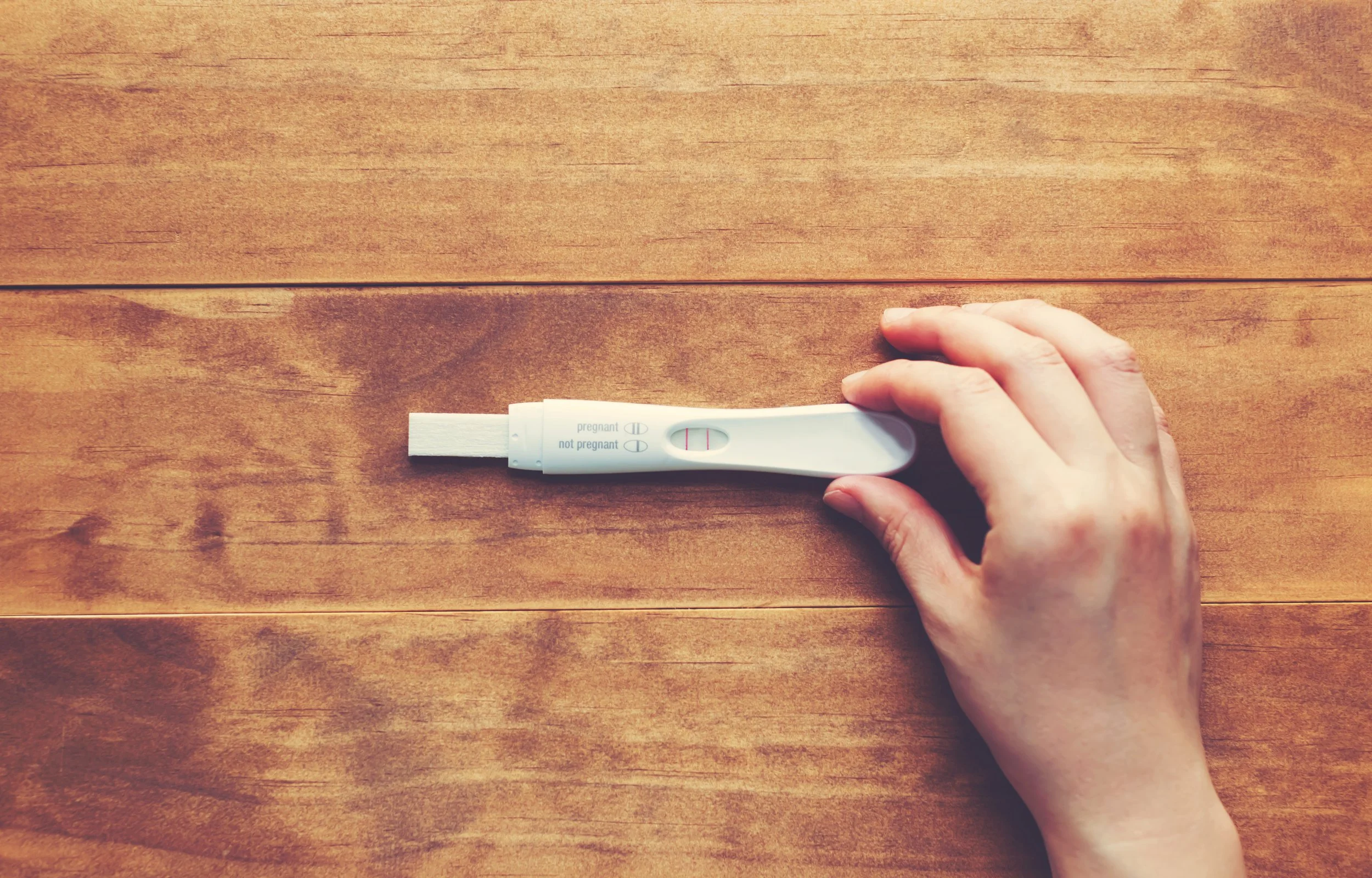
Early Signs of Pregnancy
You've been Googling at 2am. You feel off — but you're not sure if it's in your head or in your uterus. As a Labor & Delivery nurse and practicing doula, I've sat with hundreds of women in those exact in-between moments, and I'm here to tell you: your body usually knows before the test does.
Early pregnancy symptoms can show up as early as 6–10 days after conception — long before a missed period — and they look different for everyone. Some women feel everything at once. Others barely notice a thing. Neither experience is wrong.
Here's what to actually watch for in those first few weeks.
Before the positive test—your body already knows.
So you’re feeling... off? A little nauseous, a little weepy, and suddenly repulsed by your favorite coffee? Before you chalk it up to PMS or a bad takeout order, your body might be trying to tell you something:
“Hey—you’re building a whole human in here.”
Here are the early signs of pregnancy backed by science—and how to actually deal with them.
The First Clues: Common Early Pregnancy Symptoms & How to Cope
1. Fatigue (aka "Nap is now your love language")
Why it happens: Progesterone is working overtime and so is your body—you're building the placenta, increasing blood volume, and doing it all while possibly not even knowing you're pregnant yet.
How to manage:
Rest like it’s your job. Because it kind of is.
Prioritize hydration and protein.
Magnesium lotion + a warm bath = a first trimester power move.
Doula tip: This is not the time to “push through.” Sleep when your body says sleep. Period.
Source: AWHONN – Perinatal Nursing
2. Nausea (but surprise—it’s not just in the morning)
Why it happens: Blame rising hCG levels and your superhero-level sense of smell. Your body’s doing amazing things—and it’s kind of freaking out about it.
How to manage:
Ginger chews, SeaBands, and peppermint oil in your bra (yes, really)
Eat before you’re hungry (an empty stomach makes it worse)
Keep crackers or dry cereal on your nightstand
Doula tip: A spoonful of almond butter before bed can help keep nausea from waking you up at 3 a.m. You're welcome.
Source: ACOG Practice Bulletin No. 189
3. Tender Breasts (aka "Don’t even look at them wrong")
Why it happens: Estrogen + progesterone = breast tissue expansion and blood flow increase. Translation? Sore, heavy, and maybe even tingly boobs.
How to manage:
Ditch the underwire—soft, stretchy bras are your new besties.
Cold compresses can help (frozen peas, meet boobs).
Say yes to body butter—it soothes and supports skin changes too.
Doula tip: You might need to sleep in a bra—and that’s not a crime. Do what feels good.
Source: JOGNN – Hormonal Changes in Early Pregnancy
4. Mood Swings (you laughed, then cried, then rage-cleaned your fridge)
Why it happens: Hormonal shifts affect neurotransmitters. Also, growing a human is a lot.
How to manage:
Journal the chaos—seriously, get it out of your head and onto paper.
Say no more often (emotional bandwidth is a real thing)
Talk to your partner or a support person. Tell them, “It’s not you, it’s hormones.”
Doula tip: You're not dramatic. You're rewiring your brain and body—cut yourself some slack.
Source: March of Dimes – "Hormones and Pregnancy"
5. Missed Period (the one that makes you go “wait a minute...”)
Why it happens: If implantation occurred, your uterus is now too busy building a home for your baby to bother with its regular monthly eviction notice.
How to manage:
Take a pregnancy test (early response tests can detect hCG ~10 days post-ovulation)
Start prenatal vitamins if you haven’t already
Call your provider—early prenatal care is gold
Doula tip: Light spotting isn’t always your period—implantation bleeding is real and common.
Source: Mayo Clinic – Pregnancy Symptoms: What Happens First
Other Possible Early Symptoms
Increased urination
Food cravings or aversions (hello, pickles and peanut butter)
Bloating
Mild cramping
Heightened sense of smell
Remember: You don’t need to have all the symptoms to be pregnant. One is enough. Trust your gut (even if it’s nauseous).
From Your Doula/L&D Nurse
If something feels different… don’t gaslight yourself. You know your body. Your body knows what it’s doing. And even when it feels chaotic, there’s wisdom in it.
When to Call Your Provider
If your period is late and you’re unsure—test and book an appointment.
If you’re experiencing severe pain, heavy bleeding, or dizziness—seek care immediately.
If your gut says something’s up? Call. Always.
References
AWHONN. (2020). Perinatal Nursing (5th Edition)
ACOG Practice Bulletin No. 189 (2018)
JOGNN. Hormonal Changes in Early Pregnancy
Mayo Clinic. Pregnancy Symptoms: What Happens First
March of Dimes. Hormones and Pregnancy
Keep Reading

How to Write a Birth Plan That Providers Will Respect
Creating a birth plan helps you communicate your wishes for labor, delivery, and postpartum care. But what should you include? Learn how to write a clear, flexible birth plan that hospitals and providers will respect—plus key decisions to consider for a smoother birth experience. Read on for expert tips from a doula & labor nurse!
Bringing a new life into the world is one of the most empowering and transformative experiences you will ever have. Your birth plan is a powerful tool that helps ensure your voice is heard, your wishes are understood, and your birthing experience is as positive as possible. By crafting a birth plan that balances your preferences with flexibility, you can create a supportive and respectful environment for your labor and delivery.
Why a Birth Plan Matters
Your birth plan is more than just a checklist—it’s a reflection of your hopes and values for your baby’s birth. It communicates your priorities to your medical team, providing them with insight into how they can best support you. While labor can be unpredictable, having a clear plan in place can help you feel confident and in control.
Birth Plans: A Guide, Not a Guarantee
Think of your birth plan as a roadmap rather than a rigid set of rules. Birth is a dynamic and fluid experience, and sometimes, unexpected situations arise. The most important thing is that you feel supported and empowered in every decision. By allowing room for flexibility, you enable your healthcare team to adapt while keeping your well-being and your baby's safety at the forefront.
Key Elements of a Birth Plan That Earns Respect
To ensure your birth plan is well-received and works for you, keep these strategies in mind:
1. Keep It Concise and Clear
Your medical team is dedicated to your care, but they are also busy. Keep your birth plan straightforward and to the point—one page is ideal for quick reference.
2. Use Positive and Collaborative Language
Your birth plan should invite partnership, not opposition. Instead of strict demands, use phrases like "I would appreciate intermittent monitoring if possible" to create a sense of teamwork with your providers.
3. Prioritize What Matters Most to You
Every birth experience is unique. Rather than listing every possibility, focus on the aspects that mean the most to you, such as movement during labor, pain relief options, or immediate postpartum bonding.
4. Stay Open to Medical Recommendations
Knowledge is power! Expressing your preferences while remaining open to medical advice ensures that you receive the best possible care. You can include a statement like, "I understand that medical interventions may be necessary and ask that they be explained to me whenever possible."
5. You Have the Right to Say No
This is your body, your baby, and your birth. You always have the right to decline any intervention. If you need time to think or want something explained differently, don’t hesitate to ask. Labor can be overwhelming, and it’s okay to request a pause or clarification before making decisions.
6. Discuss Your Plan with Your Provider in Advance
One of the most effective ways to ensure your birth plan is respected is to review it with your provider before labor. This allows for open discussions about what is feasible and helps address any concerns in advance.
7. Include Preferences for Unexpected Situations
While your ideal birth experience is the goal, it’s wise to outline preferences for potential changes, such as a C-section or NICU stay. Having a plan in place ensures you remain informed and involved no matter what happens.
Sample Birth Plan Template
Labor Preferences: Calm environment, dim lighting, freedom to move, intermittent monitoring
Pain Management: Open to IV pain relief but prefer to avoid an epidural unless necessary
Interventions: Prefer minimal cervical checks, would like to avoid an episiotomy unless medically required
Delivery Preferences: Delayed cord clamping, immediate skin-to-skin contact, partner to cut the umbilical cord
Postpartum Care: Breastfeeding support, baby rooming-in
Baby Care:
Newborn medications (Vitamin K, eye ointment, hepatitis B vaccine) preferences
Feeding plan (breastfeeding, formula, or combination)
Delayed newborn bath
Preference for or against a hat after birth
Final Thoughts
Your birth experience is uniquely yours, and your birth plan is a valuable tool in making it as positive and supported as possible. By keeping it clear, collaborative, and flexible, you ensure that your voice is heard and respected. You’ve got this! Your strength, intuition, and preparation will guide you through an incredible journey to meeting your baby.
Keep Reading